
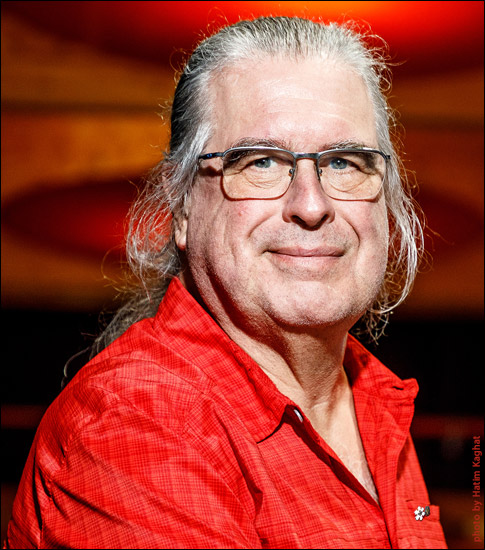
2025 ACM A.M. Turing Award Laureate
Université de Montréal, Cada
Title: Alan Turing and Me
Abstract: Alan Turing is one of the greatest mathematicians of the 20th century, as well as being the founding father of computer science. I am therefore very proud to have received the ACM award that bears his name. However, rather than talk about the work that earned me this accolade, I’m going to tell you a surprising story: in his foundational 1936 paper, in which Turing introduced what is known today as the Turing machine, he gave a completely inappropriate definition for computable real numbers. Indeed, according to his definition, addition and multiplication by three would not be computable! But alas, even with the best definition known today (which is probably the best possible definition), the question of whether a real number is equal to zero remains undecidable. All of this is related to the fascinating intuitionistic mathematics of Brouwer, about which I shall not presume any prior knowledge. This is joint work with Sophie Berthelette and Xavier Coiteux-Roy and published as https://doi.org/10.1016/j.tcs.2024.114573.
Short Bio:
Professor Gilles Brassard is a Professor of Computer Science
at the Université de Montréal, Canada, and one of the world’s most
influential pioneers in quantum information science, quantum cryptography,
and quantum computing. He is the recipient of the 2025 ACM A.M.
Turing Award, the highest distinction in computer science, jointly with
Charles H. Bennett, in recognition of their groundbreaking contributions
to the foundations of quantum information science and secure communication.
Professor Brassard is widely recognised as a founding father of quantum
cryptography. Together with Charles Bennett, he developed the revolutionary
BB84 quantum key distribution protocol in 1984, establishing
the foundations of quantum-secure communication by demonstrating how
the principles of quantum mechanics could be used to achieve unprecedented
levels of information security. He also played a pioneering role
in the discovery of quantum teleportation in 1993, one of the most remarkable
breakthroughs in quantum information science. His research
has fundamentally transformed our understanding of information, computation,
and security, helping establish quantum information science as
a major scientific discipline.
Over his distinguished career, Professor Brassard has made numerous
seminal contributions to theoretical computer science, cryptography,
and quantum information processing. His visionary work has not only
shaped the theoretical foundations of quantum technologies but also inspired
practical advances in quantum communication networks, quantum
computing, and next-generation cybersecurity. His research continues to
influence scientists and engineers worldwide and has played a central role
in the emergence of today’s rapidly developing quantum technology industry.
His extraordinary scientific achievements have been recognised through
many of the world’s most prestigious honours, including the Wolf Prize in
Physics (2018), the Breakthrough Prize in Fundamental Physics (2023),
and the Gerhard Herzberg Canada Gold Medal for Science and Engineering
(2009). He is a Fellow of the Royal Society of London and the
Royal Society of Canada, and an International Member of the US National
Academy of Sciences.
Professor Brassard earned his PhD in Computer Science from Cornell
University in 1979 and has spent his academic career at the Université de
Montréal, where he has mentored generations of researchers and helped
establish Canada as a leading centre for quantum information research.
His pioneering discoveries have reshaped the boundaries between computer
science and physics, leaving an enduring legacy in modern science
and technology.
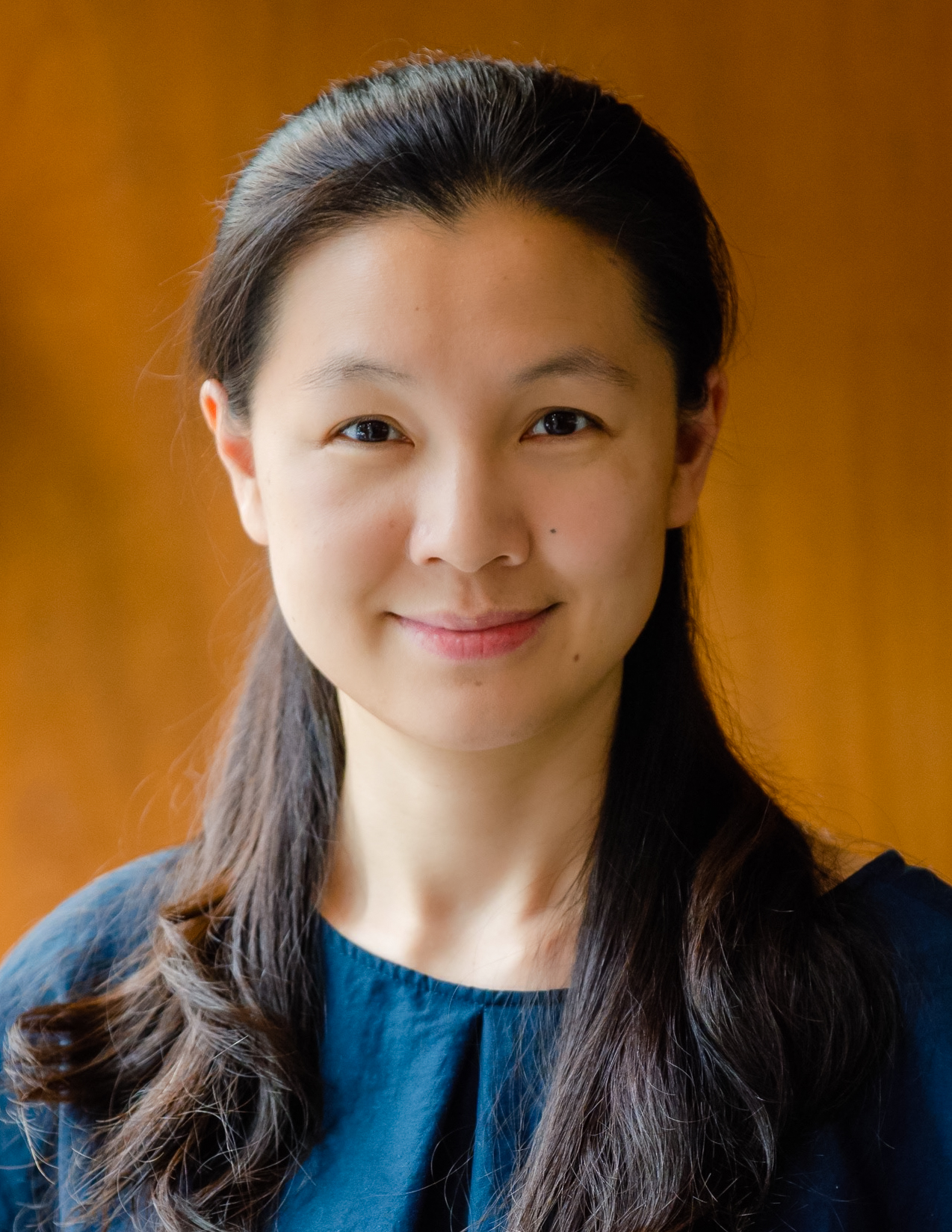
Fellow of the Institute of Electrical and Electronic Engineers (IEEE)
Fellow of the Association for Computing Machinery (ACM)
Discipline Leader for Data Science, School of EECS, The University of Queensland, Australia
Title: Learning at Test Time: Towards Adaptive AI in a Connected World
Abstract:
AI systems are increasingly deployed
in connected environments
where data streams, sensors, operating
conditions and task requirements
change after training. How
can these systems remain useful
when retraining is costly and computing
resources are limited?
This keynote explores learning
and adaptation at test time
as a way to make better use
of existing models. Four research
examples illustrate different
strategies: retaining complementary
model knowledge as conditions
shift; condensing visual tokens
to focus computation on informative evidence; building and updating
flexible 3D scene representations from live sensor data; and designing
vision-language-action models so multiple skills can be combined with less
interference.
Together, these projects suggest a broader view of intelligence at deployment:
systems must manage what they remember, what they attend
to, how they represent their environment and how they coordinate learned
skills.
Short Bio: Helen Huang is a Professor and the Discipline Leader for Data Science in the School of EECS at The University of Queensland. Her research interests mainly include multimedia indexing and search, computer vision, recommender systems, and knowledge discovery. Helen has served as an Associate Editor for The VLDB Journal, ACM Computing Surveys, ACM Transactions on Information Systems (TOIS), IEEE Transactions on Multimedia (TMM), Pattern Recognition Journal, etc and also a member of the VLDB Endowment Board of Trustees. Helen has been elevated to IEEE Fellow and ACM Fellow for contributions to large-scale multimedia content understanding, indexing and retrieval.
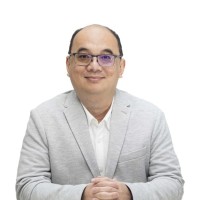
Fellow of the Institute of Electrical and Electronic Engineers (IEEE)
Fellow of the Institution of Engineering and Technology (IET)
Australian Laureate Fellow
Director, Institute of Cybersecurity and Cryptology, The University of Wollongong, Australia
Title: Securing the Web: From Real-World Vulnerabilities to Post-Quantum Cryptography
Abstract:
The modern Web
has evolved into a deeply interconnected
ecosystem supporting
critical services, intelligent
applications, and everyday
communication. Yet
securing this ecosystem remains
a fundamental challenge.
Web security depends
not only on sound cryptographic
foundations, but also
on how security mechanisms
are implemented and used in
practice. A weakness at either
level can undermine the security
of the entire system.
In this keynote, we explore Web security from these two complementary
perspectives. We first examine security challenges arising in realworld
Web applications, focusing on API key leakage in browser extensions.
Drawing on our recent work, KeyChaser, we show how insecure
credential management in browser extensions can expose sensitive information
and enable unauthorized access to online services beyond the extensions’
intended functionality. These findings highlight an important
lesson: API key authentication alone cannot prevent unauthorized access
when privileged keys are exposed in client-side code, underscoring the
need for secure credential management and fine-grained access control.
We then turn to the cryptographic foundations of secure Web communication,
particularly HTTPS and Transport Layer Security (TLS). While
modern cryptography provides powerful mechanisms for protecting information
in transit, advances in quantum computing pose a fundamental
challenge to widely deployed public-key cryptography. We discuss how
post-quantum cryptography changes the security landscape and how the
transition to quantum-resistant mechanisms can help protect the future
Web. By connecting vulnerabilities that affect the Web today with cryptographic
challenges that may shape its future, this keynote presents a
broader view of Web security, from securing applications in practice to
building cryptographic foundations capable of protecting the next generation
of the Web.
Short Bio: Distinguished Professor Willy Susilo is an Australian Laureate Fellow and Director of the Institute of Cybersecurity and Cryptology (iC2) at the University of Wollongong, Australia. He is a Fellow of IEEE, IET, ACS, AAIA, and AIIA, and an internationally recognised researcher in cryptography and cybersecurity. Professor Susilo received the prestigious ARC Australian Laureate Fellowship in 2023 and the NSW Premier’s Prize for Engineering and Communications Technology in 2024. He previously held an ARC Future Fellowship (2009) and served as Head of the School of Computing and Information Technology at the University of Wollongong from 2015 to 2025. He has published over 500 research papers in cryptography and network security, with influential contributions to short digital signature schemes. He serves as Editor-in-Chief of Computer Standards & Interfaces (Elsevier) and Information (MDPI), and as an Associate Editor of IEEE Transactions on Dependable and Secure Computing. His achievements have been recognised through several university awards, including Researcher of the Year (2016), Supervisor of the Year (2019), and the Vice-Chancellor’s Award for Global Strategy (2020). He received his PhD from the University of Wollongong in 2001.
| Edward Feigenbaum (Turing Award Laureate) | WI-IAT 2001, WI-IAT 2012 |
| Lotfi A. Zadeh | WI-IAT 2003 |
| John McCarthy (Turing Award Laureate) | WI-IAT 2004 |
| Tom M. Mitchell | WI-IAT 2004, WI-IAT 2021 |
| Richard M. Karp (Turing Award Laureate) | WI-IAT 2007 |
| Yuichiro Anzai | WI-IAT 2011 |
| John Hopcroft (Turing Award Laureate) | WI-IAT 2013 |
| Andrew Chi-Chih Yao (Turing Award Laureate) | WI-IAT 2014 |
| Joseph Sifakis (Turing Award Laureate) | WI-IAT 2015, WI-IAT 2021 |
| Butler Lampson (Turing Award Laureate) | WI 2016 |
| Leslie Valiant (Turing Award Laureate) | WI 2016, WI-IAT 2021 |
| Raj Reddy (Turing Award Laureate) | WI 2017 |
| Frank van Harmelon | WI-IAT 2021 |